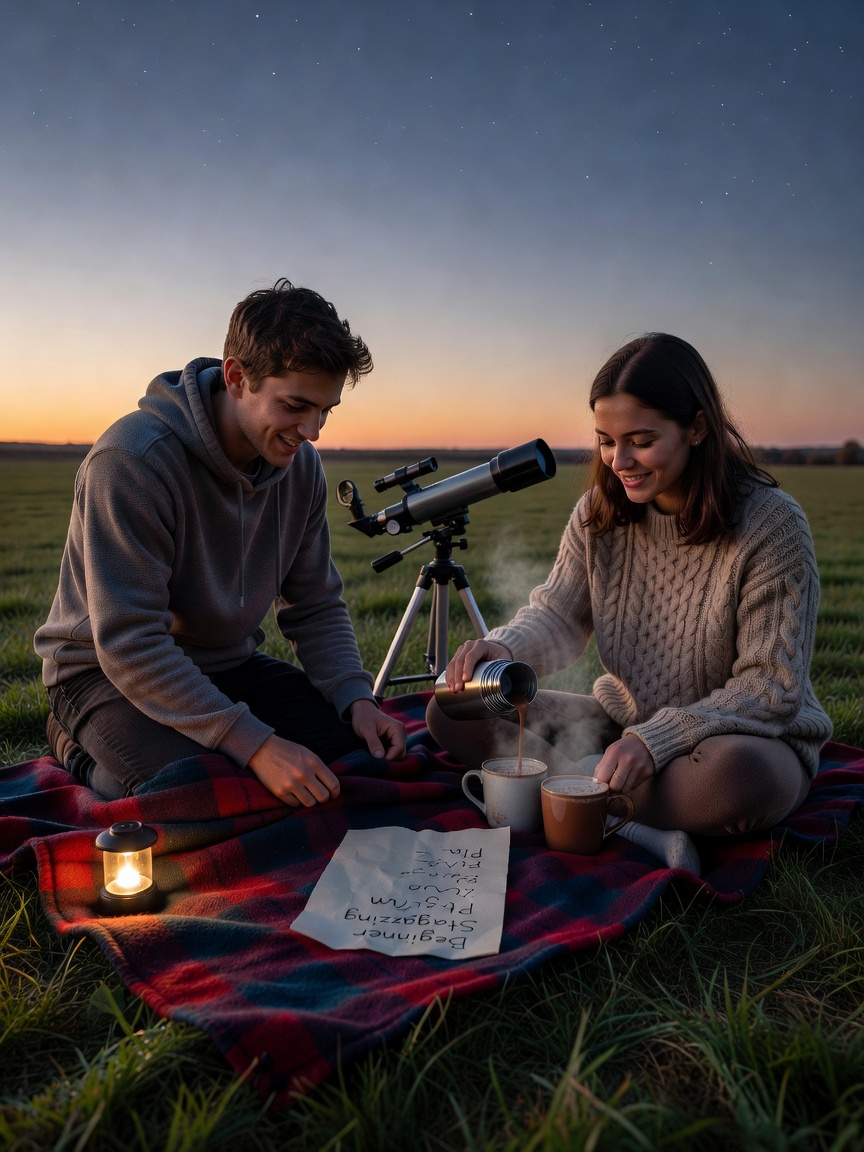
Make the plan small enough to enjoy
Choose a clear evening when you can spare half an hour. Check the local forecast, including cloud cover and wind, and make sure the place you intend to visit is open and safe after dark. A familiar garden, balcony, or public location with permitted evening access can be a better first choice than a remote destination. Tell someone where you are going if you will be away from home.
Set one modest aim: look at the Moon, find a bright star, or simply notice how many stars appear from your chosen spot. You do not have to identify everything. A short session with a clear, comfortable goal is more useful than an ambitious trip that leaves you cold, tired, or worried about getting home.
Bring comfort before equipment
- Wear an extra warm layer; standing still can feel colder than walking.
- Bring a chair or blanket, water, and a small snack if your outing will last.
- Use a dim red light only when needed, and keep ordinary bright screens low.
- Pack a printed chart or save a sky reference for offline use before leaving.
- Check the route, access rules, transport, and return plan in daylight.
For a first visit, leave expensive equipment at home. A phone can help with planning, but its bright screen can make it harder to see faint stars after your eyes adapt. Lower the brightness, use a night-friendly display setting if available, or put the phone away for stretches of the session.
Give your eyes and attention time
After moving from a bright indoor space, it takes time for your vision to become more sensitive in dim conditions. Avoid expecting an instant transformation. Stay in one safe place, look slightly away from very faint targets, and let your attention move around the sky. If you need a light, keep it dim and pointed down. Nearby headlights, porch lights, and bright screens can interrupt your adaptation, so position yourself thoughtfully where possible.
Begin with the Moon when it is visible. Its changing shape and the boundary between light and shadow offer plenty to notice without magnification. On other nights, look for the brightest points and compare their steadiness and color. Some bright points may be planets, but their visibility depends on date, location, and time; check a current, reputable sky guide rather than assuming a fixed schedule.
Keep your expectations grounded
Most casual observing does not look like a vivid photograph. The eye sees a live view with a smaller range of brightness and color than a camera can capture with long exposures. That does not make the experience lesser: the Moon’s crisp edge, a recognizable pattern, or the quiet scale of the sky can be rewarding in its own right. Light pollution, haze, the Moon’s phase, and your local horizon all affect what is visible.
A gentle next step
Before you leave, note the date, approximate time, weather, and one thing you noticed. The note can be as short as “thin Moon above the rooftops.” Repeating a simple session helps you recognize seasonal changes and familiar directions. When you are ready, use patterns to find your bearings, invite a friend with our group-night guide, or see whether beginner gear suits the way you like to observe.