Try the unaided sky first
Your eyes are a ready-to-use observing tool. They give a wide view that makes it easier to find broad patterns, follow the Moon, and learn how the sky is arranged. They also require no setup or carrying case. A first visit can tell you what interests you before you decide whether magnification would add to the experience.
Optical gear cannot repair poor conditions. Cloud, haze, bright local lighting, shaky support, or an obstructed view can limit any instrument. Before buying, consider borrowing equipment from a club, joining a public observing event, or asking an experienced observer to demonstrate a few options. A real hands-on view is more informative than a product description.
Binoculars: a portable next step
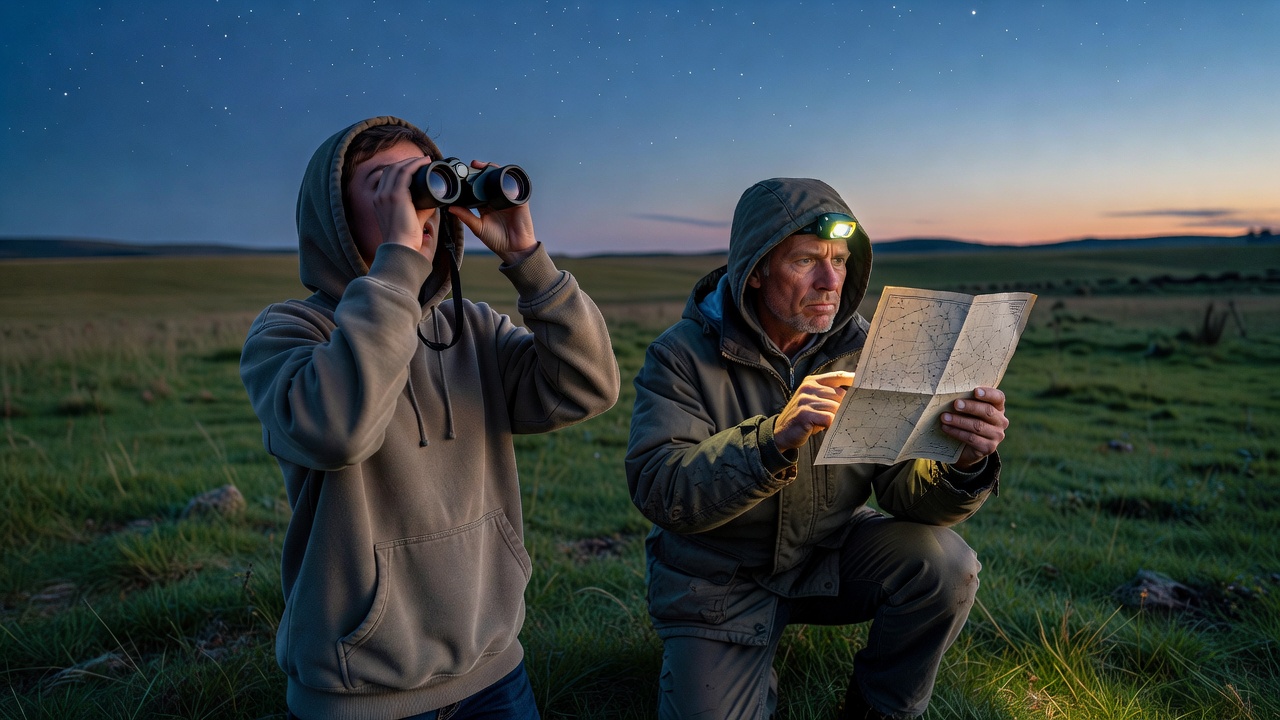
Binoculars can show a wider field than many telescopes and are often straightforward to carry. They may help reveal lunar surface detail and make some star fields easier to explore, depending on the instrument and conditions. Holding them steady can be difficult, especially at higher magnification, so a comfortable grip and a supported posture matter. Large, heavy binoculars may need a mount, which reduces their grab-and-go simplicity.
Look for comfortable eye placement and a size you can handle for a while. Do not assume the highest magnification is the best choice: a wider, steadier view can be more useful when learning the sky. Never point binoculars toward the Sun unless they have suitable solar filters designed for that exact use and correctly fitted over the front apertures.
Telescopes: more reach, more setup
A telescope gathers light and magnifies a smaller portion of the sky. Different designs trade factors such as portability, field of view, setup, and maintenance. The mount is as important as the optical tube: a shaky or awkward mount can make locating and following targets frustrating. Before choosing, ask how much you are comfortable carrying, where you will store the equipment, and whether you can set it up reliably in the dark.
Be cautious of sales language promising dramatic color or effortless views of every object. Visual observing generally differs from long-exposure astrophotography. Choose equipment based on realistic use, clear instructions, available support, and a return policy you understand. A simple telescope used regularly can be more valuable than a complex one that stays packed away.
| Option | Useful for | Things to consider |
|---|---|---|
| Naked eye | Wide patterns, Moon, learning orientation | Light pollution and eyesight affect what appears |
| Binoculars | Portable, wider-angle exploration | Steadiness, weight, and comfort matter |
| Telescope | Closer views of selected targets | Mount, setup, storage, and learning curve |
Accessories that help rather than distract
Warm clothing, a stable chair, a dim light, a printed chart, and a safe place to rest equipment can improve a session more than novelty add-ons. A simple tripod or binocular support can help if the gear is heavy. Lens caps and a dry, clean storage place protect optics. Keep cleaning materials appropriate to the manufacturer’s instructions; rubbing dusty optics with an ordinary cloth can scratch delicate coatings.
For solar observing, ordinary sunglasses, improvised filters, and filters placed only at the eyepiece are not safe substitutes for equipment designed for solar viewing. Use a purpose-built, correctly fitted solar filter or do not observe the Sun through optics. When in doubt, ask an established astronomy organization or qualified retailer for guidance.
Buy for your actual observing habits
Try equipment where possible, check what is included, and factor in the full setup rather than the headline price. Ask whether replacement parts, instructions, and knowledgeable support are available. Start with one tool that matches your interests instead of buying a whole collection at once. Your observing notes can help: if you consistently wish you could see a wider star field, binoculars may be worth trying; if you love careful lunar detail, a telescope demonstration could be a helpful next step.
Whatever you choose, keep a comfortable first-night plan. Our sky basics guide offers a no-pressure starting point, and the shared observing guide can help you try gear with others.