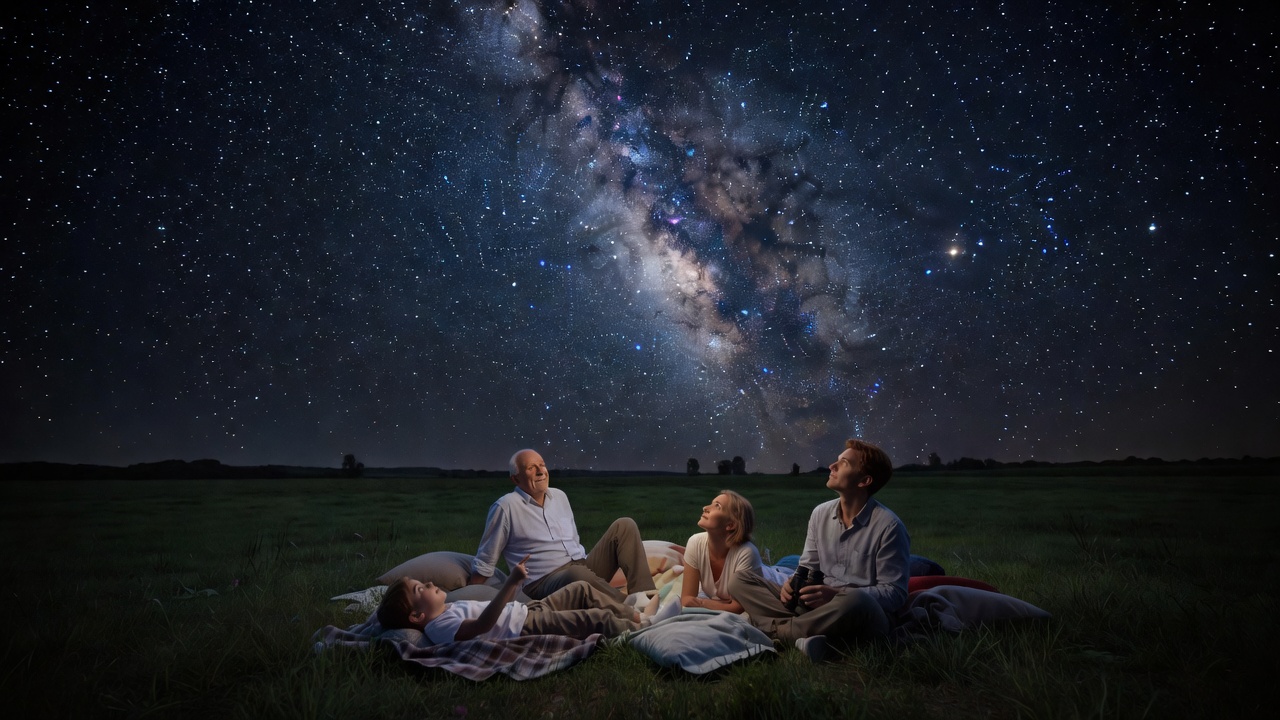
Choose a place with people in mind
Look for a location that is legally open at the time you plan to visit, has a clear view of at least part of the sky, and can be reached safely after dark. A perfectly dark site is not worth an unsafe route or uncertain access. Check opening hours, parking or transit options, toilets, mobility access, and whether the venue permits evening gatherings. For a first group outing, a familiar public park or an organized local astronomy event may be easier than a remote site.
Visit in daylight if you can. Note uneven ground, steps, gates, nearby traffic, lighting, and a place to gather without blocking paths. Share the location and return plan with attendees ahead of time. Be specific about the meeting point and what to do if someone arrives late. Respect neighbors, wildlife, and posted rules.
Set expectations before the evening
Tell people the outing is weather-dependent and that the sky may be cloudy. Offer a simple backup plan, such as a short indoor introduction to sky maps or rescheduling. Make clear that no one needs equipment or prior knowledge. Ask guests to bring warm layers, a seat if useful, and any personal essentials. If participants have access or sensory needs, invite them to share what would make the location and activity more comfortable without making disclosure a condition of joining.
Keep the schedule light. A brief welcome, a few minutes to settle in, one shared sky target, and unstructured time can be plenty. Avoid long lectures in the dark. Point out something visible, explain how you found it, then give people time to look for themselves. A hand-drawn chart or a few printed copies can be more useful than passing around one bright phone.
Protect dark adaptation and comfort
- Ask everyone to dim phone screens and avoid unnecessary white light.
- Use low-output red lights where practical, while prioritizing safe footing.
- Keep paths clear of bags, cables, chairs, and tripod legs.
- Provide a warm-up option and do not pressure anyone to stay longer.
- Agree on a simple check-in and headcount plan for the group.
Darkness should never be treated as more important than safety. If someone needs a brighter light to move safely, use it carefully and give the group a moment to readjust. Keep equipment away from walkways, and do not invite anyone to look through an instrument until the observer has explained how to approach it.
Make sharing the view feel fair
When a telescope or binoculars are part of the evening, explain what people may see and how to take turns. A compact telescope’s view can be narrower and less colorful than a photograph; expectation-setting helps newcomers appreciate what is genuinely there. Give each person enough time without making the line feel like a race. If there is no equipment, the night still has a focus: use unaided vision to compare star brightness, trace a pattern, or follow the Moon’s changing position.
Invite questions and accept “I don’t know” as a useful answer. Look up a detail later from a trustworthy source rather than guessing. Different ages and levels of experience can share observations without competing to name the most objects. A child’s question about why the Moon looks different can be as welcome as a detailed question about a star chart.
Close the night kindly
Finish before people are exhausted or chilled. Check that no one is left behind, take all rubbish and gear, and leave the site as you found it. Afterward, send a short note with a sky resource, a reminder of what the group observed, and an invitation to return. For a personal first outing, review the simple observing checklist; for shared orientation, explore learning sky patterns together.